
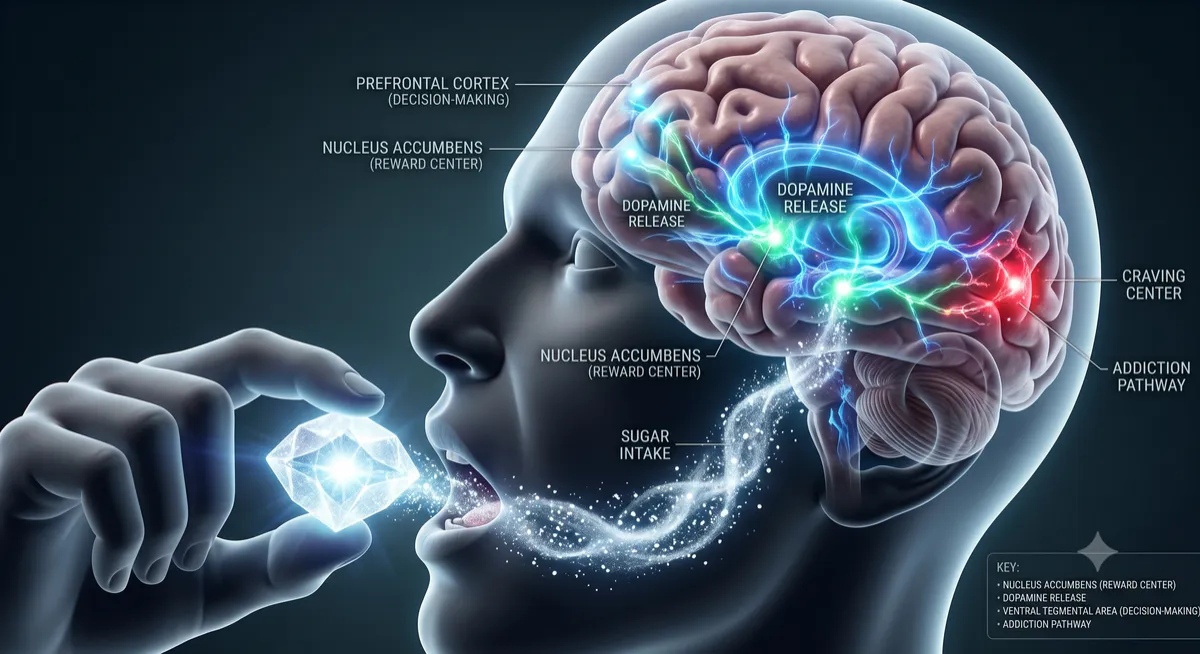
Close the Door on Sugar, Let the Vitamin C In
Your Immune System Isn't Weak. It's Locked Out.
Most people think a cold, or a stretch of feeling run down, means their immune system is getting old and tired.
Usually that's not it. Your immune cells are fine. They just can't get their hands on the one thing they need to do their job, because you keep parking sugar in front of the door.
I spent 22 years around heavy equipment before I ever opened a physiology book. So let me explain this like a fuel problem, because that's basically what it is.
It's Not Just Sugar. It's Everything That Turns Into Sugar.
When I say "sugar," don't just picture the candy dish.
Bread. Pasta. White rice. Potatoes. Cereal. That "healthy" smoothie. Your body breaks all of it down into the same thing: glucose, the sugar that ends up floating in your blood. A bagel hits your bloodstream a lot like a soda does.
So this isn't only about dessert. It's about how much sugar, from all sources, is swimming in your blood on any given day. Keep that number high all day long and you create the exact problem I'm about to walk you through.
Sugar and Vitamin C Are Almost the Same Thing
Here's the wild part. Glucose and vitamin C look almost identical at the tiny, molecular level. Same basic building blocks. Same shape.
They look so alike that your body uses the exact same doors to pull both of them out of your blood and into your cells. Same lock, same key.
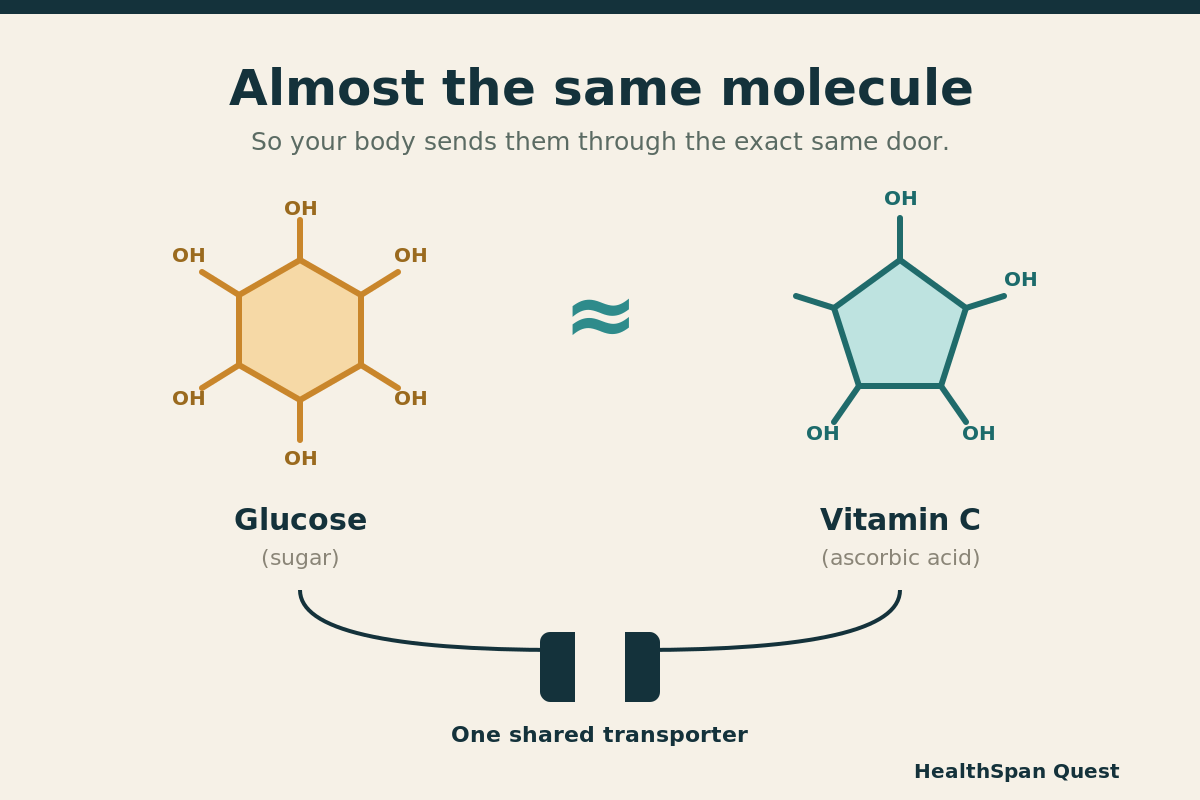
It gets weirder. Most animals build their own vitamin C right out of sugar. A dog, a cow, a mouse, they turn glucose into vitamin C inside their own bodies. Humans lost that ability a long time ago. We kept needing the vitamin, but we can only get it from food. So we're stuck with two look-alike molecules fighting over the same door, and we can only get one of them from the outside.
You're not declining. You're under-optimized. And this one got wired into us ages ago.
Meet the Cell That Does Your Fighting
When a bug gets into you, the first responder is a white blood cell called a neutrophil. The one that runs toward the fire.
It swallows the invader whole. Then it does something violent. Inside itself, it sets off what scientists actually call a "respiratory burst," basically spraying the trapped bug with the chemical equivalent of bleach.
Your white blood cell makes bleach on demand and hoses the bug down with it. That's not a metaphor. That's the real weapon.
So here's the question. If the cell is spraying bleach in tight quarters, what keeps it from destroying itself in the process?
Vitamin C. The cell loads itself up with vitamin C to protect itself from its own weapon. Think of the fireproof suit a welder wears so his own sparks don't put him in the hospital. These cells hoard vitamin C, packing in way more than what's floating in your blood. They don't do that for fun. They need it to fight.
The Traffic Jam
Now put it together.
To get inside the white blood cell, vitamin C has to go through that same door the sugar uses. But if you just had the soda, or the pasta, or the stack of pancakes, your blood is flooded with sugar. There's way more sugar than vitamin C, and they both want the same door.
Sugar wins. It crowds the doors, the transporters grab sugar over and over, and the vitamin C your immune cell is desperate for gets left standing outside. Researchers have confirmed that sugar and vitamin C really do ride the same transport system into our cells (study here).
Put simply: when your blood is full of sugar, your immune cells can't get the vitamin C they need to work. The cell isn't poisoned. It's just locked out of its own supply closet in the middle of a fight.
And a locked-out cell does two things badly. It can't find the infection very well, so it wanders. And it gets stiff, so it has a harder time grabbing the bug. A first responder that can't find the fire and can't hold the hose isn't much help.
Quick Quiz: Which Has the Most Vitamin C?
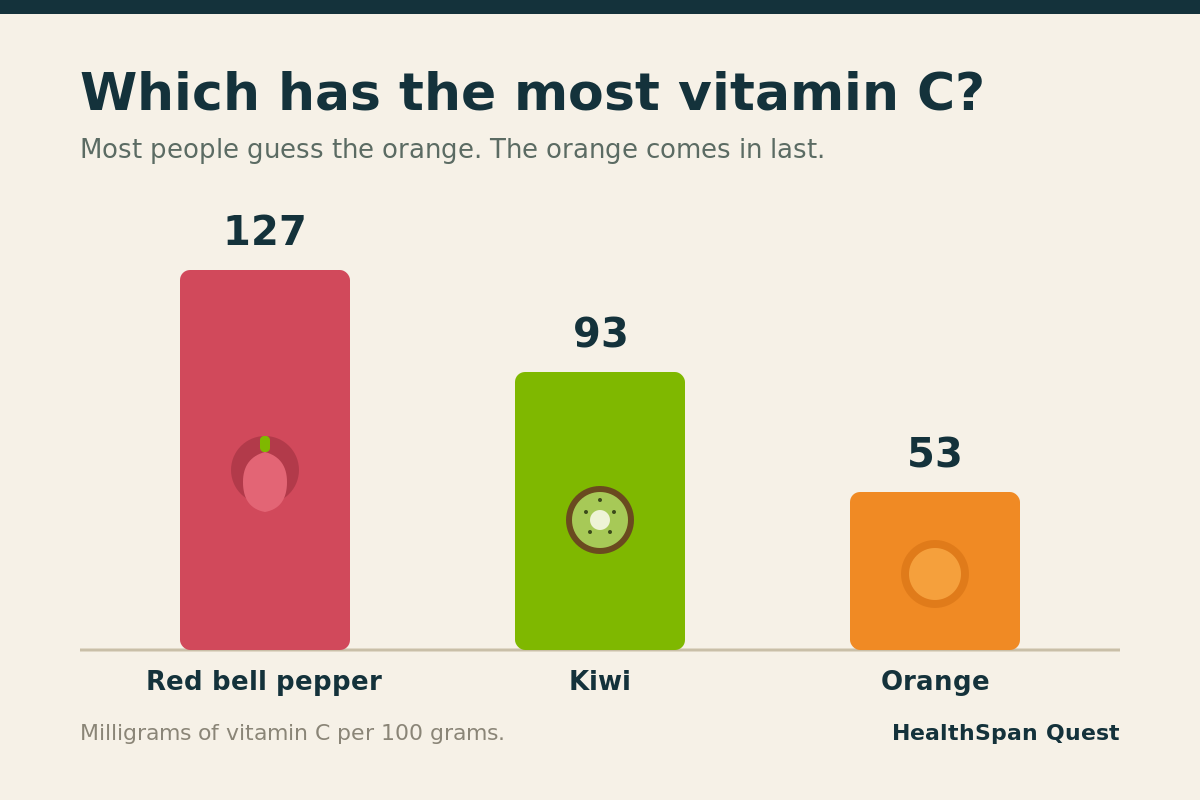
An orange, a kiwi, or a red bell pepper?
Almost everyone says orange. Oranges own the vitamin C reputation. They're dead last on this list.
Ounce for ounce, a red bell pepper has more than double the vitamin C of an orange. A kiwi beats an orange too. That green kiwi hiding in the fruit bowl and the red pepper sitting on your salad are both quietly out-doing the fruit you actually think of as "the vitamin C one."
Which brings us to orange juice, the drink people reach for the second they feel a cold coming on. It might be the worst way to get vitamin C there is. You strip out the fiber, concentrate the sugar, and pour it in fast. So you flood the door with sugar at the exact moment you're trying to sneak vitamin C through it. You're working against yourself.
Eat the whole fruit. Eat the pepper. Skip the juice.
Your Liver Is Taking a Beating Too
Here's something most people have no idea about. You can give yourself a fatty, sluggish liver with sugar. No alcohol required.
Your liver handles a lot of the sugar you eat, especially the fructose in sodas, juice, and processed food. Drown it in too much, for too long, and the liver starts storing that overflow as fat, right inside itself. Doctors used to see this mostly in heavy drinkers. Now they see it in kids who don't drink at all. The name for it has quietly become one of the most common liver conditions in the country.
Same sugar. Two different organs getting hit. Your immune cells starve, and your liver clogs.
Here's the Part We Don't Like to Admit
We're hooked. And I mean that literally.
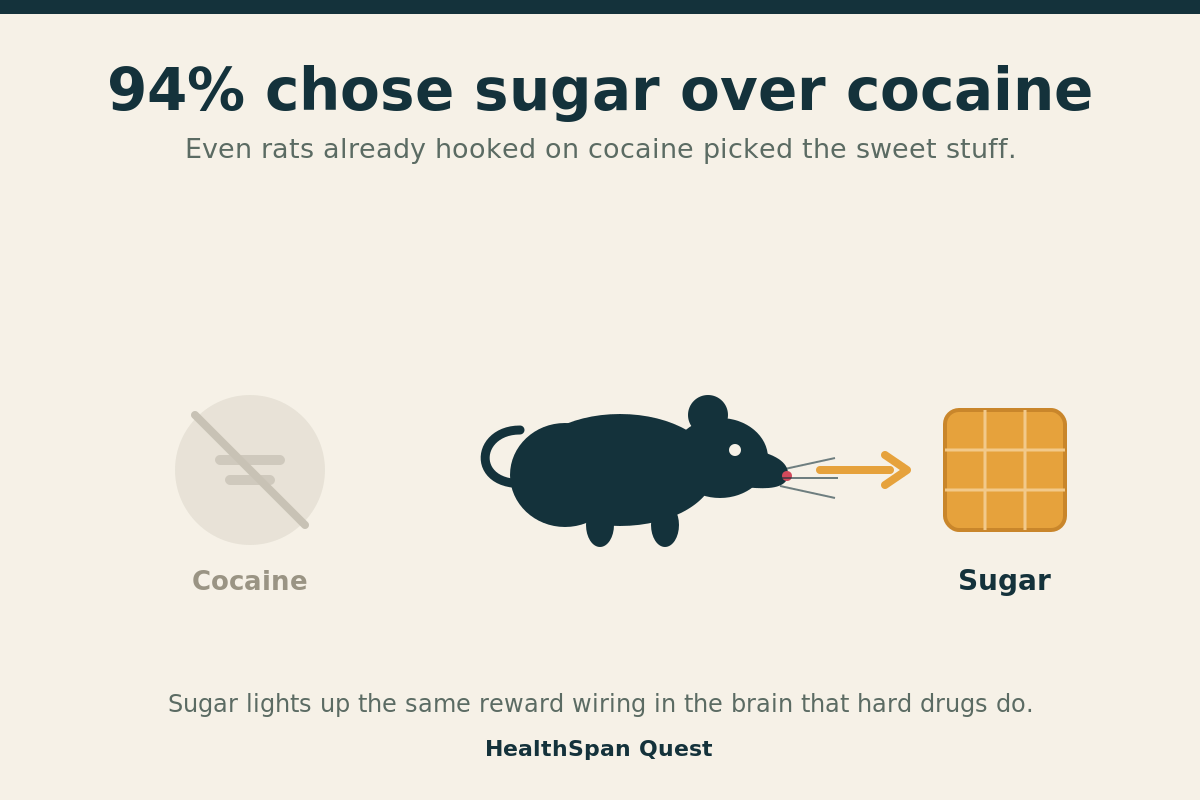
In one experiment, researchers gave rats a choice between sugar water and cocaine. Almost all of them, 94 percent, picked the sugar. Even rats that were already hooked on cocaine chose the sweet stuff (yes, that's a real study). Sugar lights up the same reward wiring in the brain that hard drugs do.
I'll be honest. As a trainer and health coach, I struggle with managing my sweet tooth too. I've done sugar detoxes and fasting to control my sugar addiction. It can be very challenging, and it takes discipline.
But I rarely get sick any more, and I honestly feel that reduced sugar intake is a major factor.
Okay, So What Do You Actually Do?
You don't need to fear a piece of fruit. You need to stop keeping your blood full of sugar all day, especially when you're run down or fighting something. Here's the simple version.
Cut the liquid sugar first. Soda, juice, sweet coffee drinks. This is the fastest win by a mile. Liquid sugar hits hardest and fastest.
When you're getting sick, skip the OJ. Eat whole fruit, a pepper, some broccoli, or take a clean vitamin C on its own. Don't chase it with sugar.
Watch the quiet carbs. The bread, pasta, rice, and potatoes add up even when nothing tastes sweet. You don't have to cut them out. Just stop letting them run all day.
Walk after you eat. Ten easy minutes after a meal pulls sugar out of your blood and into your muscles. Lower sugar, clearer doors. It's that simple.
Fix the baseline, not just the moment. If your blood sugar runs high all day, every day, the door is always crowded. Steady blood sugar is the whole game, and a big piece of it is simply not eating more than your body needs. I broke that habit down in The Clean Plate Trap.
The Part That Actually Decides This
Knowing all this changes nothing on its own. I've watched sharp people nod along and then go grab a caramel latte on the walk back to their desk. I've been that guy.
The lever isn't a supplement. It's your day-to-day blood sugar. Get it steady and the door stays open on its own.
That's where a plan helps. Start with the free 101 Anti-Aging Nutrients guide to see which foods and nutrients support steady blood sugar. If you want it built around your own life and goals, take a look at my coaching plans. It all ties back to the 10 Healthspan Pillars.
Close the door on the sugar. Let the vitamin C in.
Build a Healthspan worth living, not just a Lifespan you count.
