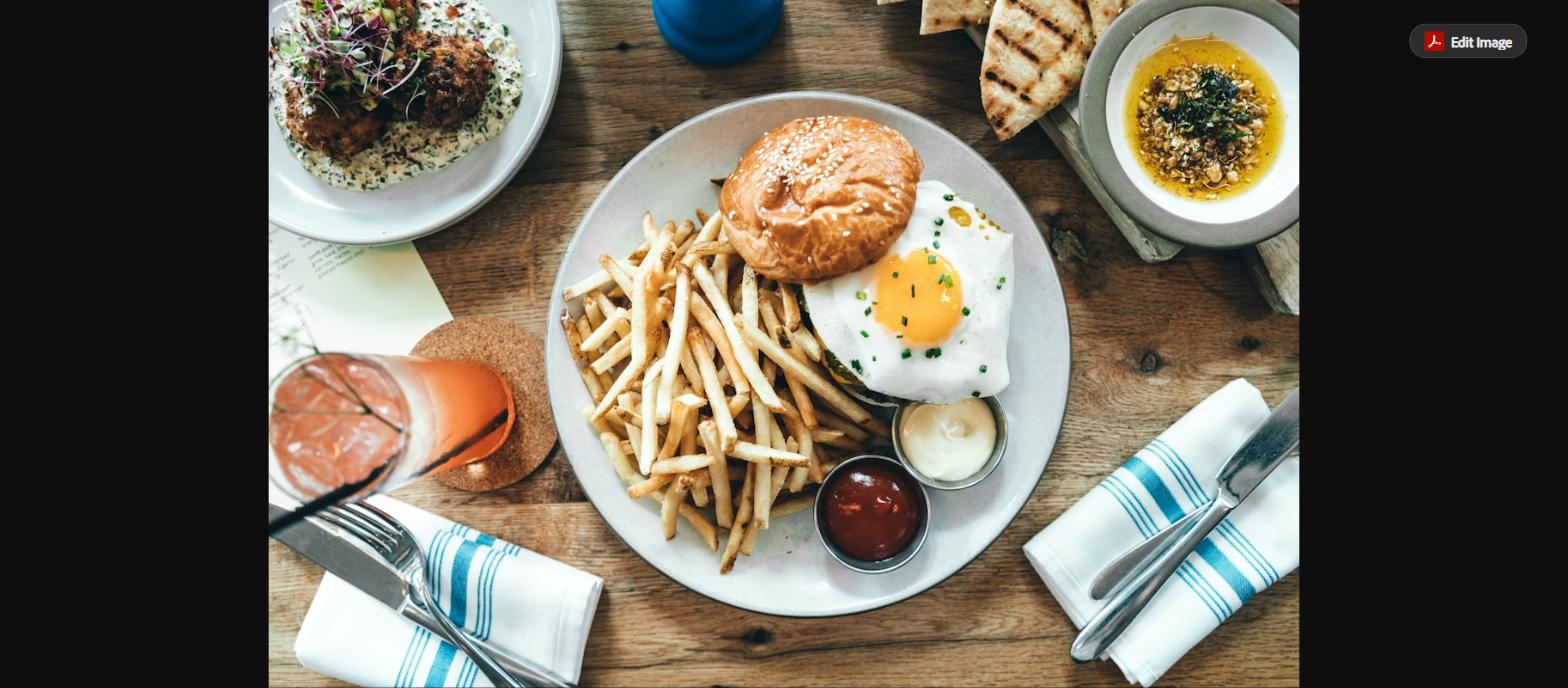
The Clean Plate Trap: Why You Eat More Than Your Body Needs
By Coach Roger | Healthspan Quest
"You are not broken, and it is not a willpower problem. Your biology is being worked. Once you can see how, you can start working it back."
When I was a kid, I was a card-carrying member of the Clean Plate Club.
You did not leave the table until the plate was empty. No exceptions. And I doubt it was just my house. It was my friends' parents. It was the lunch lady scraping trays at school. A whole generation reading off the same script.
If you tried to push the plate away, you got the guilt. "There are kids starving in other countries." As if my leftover peas were going to get on a plane and fix it.
For a long time I never asked where that rule came from. Now I think I know. My mother grew up in the shadow of the Great Depression. When money is that tight, food on the floor is money in the trash. So you cleaned your plate. You saved every penny. Back then, that made sense.
The problem is we are not living in the Great Depression anymore. We inherited a survival mindset built for a world that no longer exists — and the food companies figured out how to use it against us.
The Deal That Costs You More Than Money
That old reflex never left us. Shop by price. Never leave a deal on the table. Get the most for your dollar.
So you are standing at the counter and they hit you with it: "Do you want to supersize that for forty cents?" Your brain hears free money. More food, almost no cost. Saying no feels like wasting money — and we hate wasting money.
But here is a question worth sitting with: Why would a company feed you more than you need?
It is not charity. That forty cents is their profit, not your bargain. The raw ingredients in most of this food — corn syrup, refined flour, seed oils — are cheap. What costs them is the marketing and the packaging. Making the cup bigger costs them pennies. So they make the big size look like the only size a smart person would buy, and your fear of getting ripped off does the rest.
You saved a quarter. You paid for it with your metabolic health. That is not a deal.
Your Body Was Built for Famine
For almost all of human history, food was scarce. Our ancestors survived by grabbing the most calories they could whenever the chance came, because the next meal was never promised. That instinct kept the species alive. We are wired to want the biggest piece of chicken and the biggest bowl of fruit.
That instinct has not gone anywhere. But the famine never comes now.
We walk through a world of drive-thrus, vending machines, and pantries that never empty — carrying the brain of a hunter-gatherer who is still bracing for a winter that does not arrive. We have unlimited food and no real off switch.
I see this every day with the people I coach. Good, disciplined people trying to white-knuckle their way to eating less, fighting a brain that is screaming at them to survive. That is not a fair fight.
💡 If you are struggling to feel satisfied no matter how much you eat, your metabolism may need a reset — not more willpower. Learn how the Nutrient Code Metabolic Reset can help. Find out more →
Do Not Trust Your Eyes: The Science of Expected Satiety
Here is something most people never hear: long before you taste your food, your brain decides how full it is going to make you.
It does the math by sight. Researchers call this expected satiety — we eat with our eyes before our stomachs ever get a vote.
Watch what that does on a big plate. Put a normal, healthy portion on a giant restaurant platter and it looks like nothing. Your brain reads the empty space and quietly panics. Not enough. We are going to go hungry. Pile on more. Same food, bigger plate, more eaten — and you never felt it happen.
It works the other way too. Eat straight out of the bag in front of the TV and the hand keeps moving, because you cannot see how much is gone. Out of sight, no off switch.
My honest advice: do not trust your eyes.
It Is Not Just the Plate. It Is the Chemistry.
The size of the plate is only half of it. The other half is what is sitting on it.
There is a story about Dr. John McDougall, who ran a weight loss clinic. He was a thin man, and his patients were heavy, used to eating ultra-processed food their whole lives. He would challenge them to an eating contest — and he always won. The catch was that the contest used whole food: potatoes, corn, peas, rice. Real food fills you up so fast you physically cannot keep going. His patients simply could not eat enough volume of it to match the calories they were used to getting from a small bag of processed junk.
That is the whole thing in one story.
Whole food tells you when to stop. Ultra-processed food is built to be eaten forever. The companies pull out the fiber, add the sweeteners, and engineer chemicals your body does not recognize — and the result slips right past the fullness signal. The brake never gets pressed.
That is not an accident. That is the design they paid millions of dollars for.
Eat to Eighty Percent: The Okinawan Secret to Never Overeating
There is an old idea from Okinawa, Japan — one of the places on earth where people live the longest. They call it Hara Hachi Bu. It means: eat until you are only eighty percent full. Not stuffed. Not "I need to unbutton my pants." Just eighty percent, and then you stop.
That number matters because of the gap I talked about earlier. Your stomach takes a while to tell your brain it has had enough. If you eat to the point where you actually feel full, you have already gone past it. Eighty percent is about where you really are once the signal catches up.
Here is one thing I do every single time I sit down at a restaurant. Before I take a bite, I cut the meal in half and ask for a box. Half goes home. The portion they bring you is not a serving — it is a sales decision, and it is usually enough food for two people. I am not going to let the kitchen decide how much I eat. I decide. And I get a second meal out of the deal, so my old Depression-era brain even feels like it got a bargain.
The first few times you eat less, your body will fight you. That is normal, and it does not last. Your stomach does not actually shrink, despite what people say. What changes is something called gastric compliance — which is just how willing your stomach is to relax and stretch to hold food. Eat big meals for years and it stays loose and stretchy and always wants more. Start eating smaller, and over roughly twenty-five days it adjusts. It stops stretching out to demand the old volume. Smaller meals start to feel like plenty — because to your body, they are.
Give it about a month. You are not starving yourself. You are retraining a part of your body that got trained wrong.
💡 Want a proven system to retrain your metabolism and your appetite together? The Nutrient Code Metabolic Reset gives you the structure to do exactly that. Start here →
You Do Not Win By Fighting. You Win By Building Boundaries.
So your eyes are fooled by the plate, and your brakes are cut by the food. How do you fight back?
Not with willpower. You will lose that fight every time.
You win by changing the room around you so you do not have to rely on willpower at all. Here is what I do and teach:
🥩 Lead With Protein and Fiber First
Eat your protein and fiber first, before the bread and the rice. Those two are what actually trigger your fullness signals. When you lead with them, your body releases its own GLP-1 — the very same satiety signal those expensive weight-loss injections are paying to copy.
You already make it for free. You just have to give it the raw material.
🍽️ Put the Food Away Before You Sit Down
Keep the serving dish in the kitchen, not on the table. Better yet, put the food away before you sit down to eat. Make going back for seconds something you actually have to get up and walk for.
That little bit of friction is usually enough for your brain to say, "You know what — I am good."
This is the same principle James Clear writes about in Atomic Habits: make the thing you do not want a little harder, and you will do less of it.
🚫 Go Easy on Packaged and Fast Food
Avoid cheap fast food and anything in a package with an ingredient list as long as your arm. If your body does not recognize the ingredients, it cannot properly signal when you are done.
If You Cannot Control the Container, Control the Clock
Those are boundaries around space. If you want real control, move the boundary to when you eat.
Eat inside a window. A set stretch of hours — and only when you are actually hungry, not because the show is still on and the bag is still open. Slow down enough to let your brain catch up to your stomach.
Then shut the kitchen down. Pick a time and close it. Now you are not standing in front of the fridge at ten or eleven at night, tired and with your guard down, making the same decision over and over until you lose.
Close the kitchen and the decision is already made. That is how you beat the late-night version of yourself — the one with the least willpower of all.
FAQ: Why Do People Overeat?
Q: Why do I always finish everything on my plate even when I'm full?
A: This is the Clean Plate Club habit — a conditioned behavior rooted in scarcity thinking passed down from the Depression era. Your brain was trained to equate a full plate with obligation, not appetite. The fix is environmental: use smaller plates, pre-portion your food, and put leftovers away before you sit down.
Q: Why does eating out make me eat so much more than at home?
A: Restaurant portions are deliberately oversized, and large plates make normal portions look small — triggering your brain's expected satiety response to demand more food before you even take a bite. Coach Roger's fix: cut the meal in half and box it before you start eating.
Q: What is Hara Hachi Bu and does it actually work?
A: Hara Hachi Bu is an Okinawan practice of stopping eating when you are 80% full. It works because there is a natural delay between your stomach filling and your brain receiving the satiety signal. Stopping at 80% puts you right where you actually are once the signal arrives.
Q: Why can't I stop eating ultra-processed food even when I'm not hungry?
A: Ultra-processed foods are engineered to bypass your satiety signals. They remove fiber and replace it with sweeteners, refined fats, and synthetic flavors your body doesn't recognize as food — meaning the brake never gets pressed. This is by design.
Q: What is GLP-1 and how can I trigger it naturally?
A: GLP-1 is a hormone your gut releases when you eat protein and fiber, signaling your brain that you are full. The popular weight-loss injections work by mimicking this signal. You can trigger it naturally — for free — by eating protein and fiber first at every meal.
Q: What is gastric compliance and how long does it take to reset?
A: Gastric compliance is your stomach's tendency to stretch and accommodate large volumes of food. Years of large meals train it to always want more. Eating smaller portions consistently for approximately 25 days resets this response so smaller meals begin to feel genuinely satisfying.
Resign From the Club
We do not live in the Great Depression. We live in an era of more food than we know what to do with. The danger flipped — it used to be too little, now it is too much.
So consider this your permission to resign from the Clean Plate Club.
Stop letting a cardboard box tell you when you are full. Build your boundaries, watch the clock, and take back control of your own appetite.
You are not broken. It is not a willpower problem. Your biology is being worked. Once you can see how, you can start working it back.
🔥 Ready to go deeper? If you want a structured system to reset your metabolism, rebuild your body's natural fullness signals, and stop fighting your own biology — the Nutrient Code Metabolic Reset was built for exactly this. Start here →
#MetabolicHealth #CleanPlateClub #Overeating #PortionControl #HaraHachiBu #WholeFoods #UltraProcessedFood #GLP1 #GastricCompliance #TimeRestrictedEating #IntermittentFasting #EatSmart #FoodPsychology #Longevity #HealthspanQuest #NutrientCode #MetabolicReset #OkinawaDiet #AtomicHabits #ExpectedSatiety
